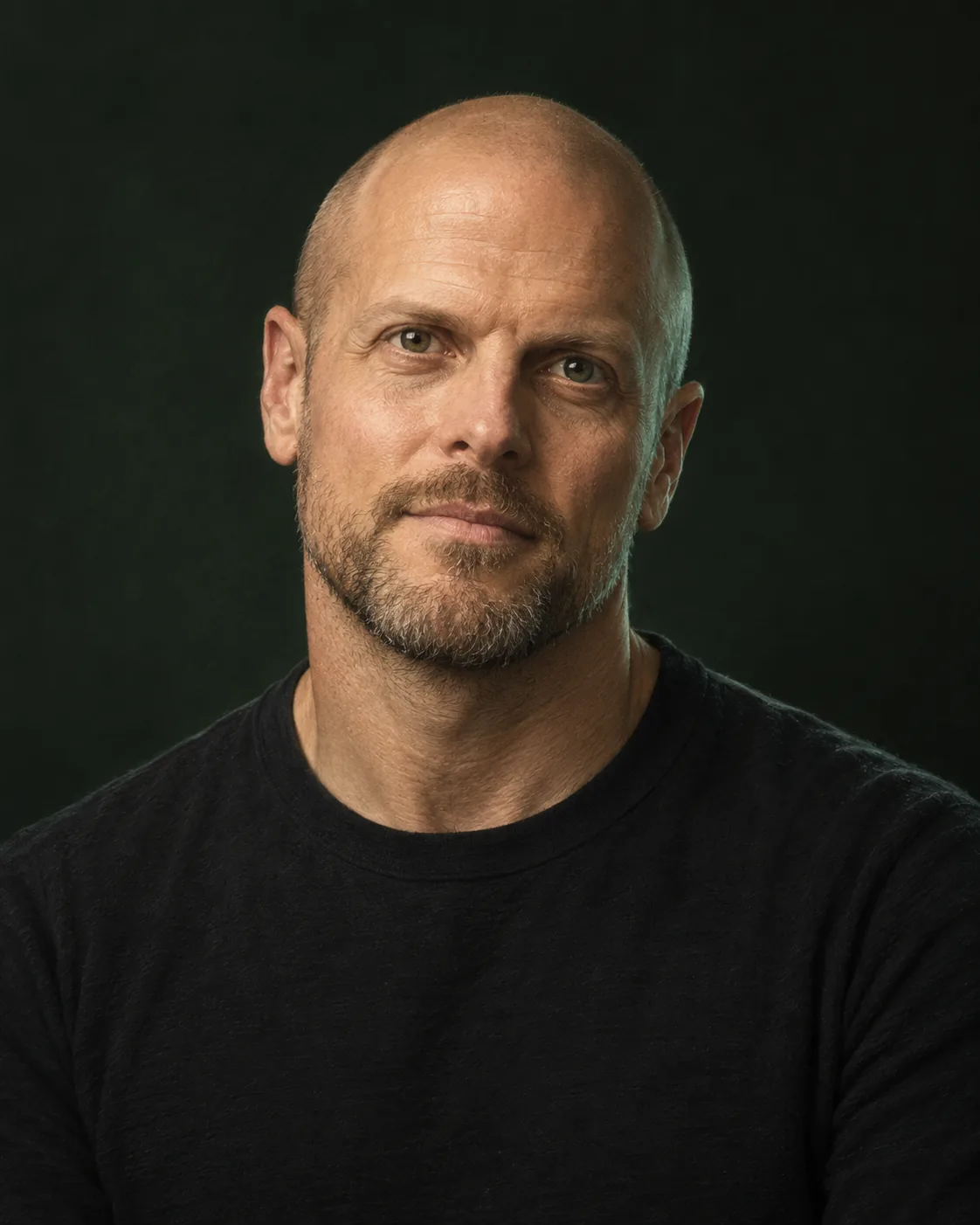
An author, entrepreneur and interviewer. The Tim Ferriss Show explores routines and decisions across sport, science, business and the arts.
Their way of thinking
Treat interviews as a way to discover questions and experiments worth investigating.
Core viewpoints
01 Editorial summary
Define the feared outcome
His fear-setting exercise separates a feared scenario from possible prevention and repair. It is a decision-reflection method drawn from his own experience.
In his 2025 Q&A, Ferriss revisits defining what matters and eliminating activities that do not serve it. This is a prioritization philosophy, not a physiological law.
In the public sample of The 4-Hour Body, Ferriss defines minimum effective dose around a specified desired outcome. The useful first move is to name that outcome: learning a movement, maintaining a habit and improving a measured fitness result are three different targets. His boiling-water analogy makes the idea memorable, but it does not establish a universal threshold for human training. A person can cross a threshold for one result while still gaining from additional work on another. This is our editorial interpretation of the framework, not an endorsement of the book’s body-composition promises.
For example, imagine someone comparing two possible lunch-break sessions. Before counting minutes, ask whether the immediate aim is practicing a movement or accumulating aerobic activity. Then count the entire time requirement, including preparation, rests and transitions. A short hard effort inside a longer session is not a complete one-minute program. This way of reading connects the interview’s appealing question to a study design that can actually answer it.
Episode 55 with Pavel Tsatsouline has official chapter notes for minimum training at 18:00 and treating training as practice at 35:45. Those are navigation hints supplied by the publisher. We checked the notes, not the full audio, so these entries should not be read as verified quotations from those moments. The point of linking the original episode is to let you hear the speaker’s context before deciding what claim to investigate.
A practical reading note can have four lines: the guest’s proposition; the outcome it promises; the kind of evidence that would test it; and a remaining question. Keep personal experience in the first line and controlled results in the third. If a guest describes a routine that worked for them, ask what changed at the same time, what comparison was missing and whether the result lasted. These questions preserve curiosity without turning someone else’s schedule into your prescription. The movement lessons below supply independent explanations rather than a Tim Ferriss approved workout.
Read the MED definition and analogy in the official public sample, printed page 19 (PDF page 36). Book chapter, not a clinical guideline; checked 2026-09-21.
A repeatable situation can make an action easier to begin. Separate automaticity from a perfect streak, a creator’s program length and the health benefit of the action itself.